
What Evidence Strengthens a Georgia Personal Injury Case?
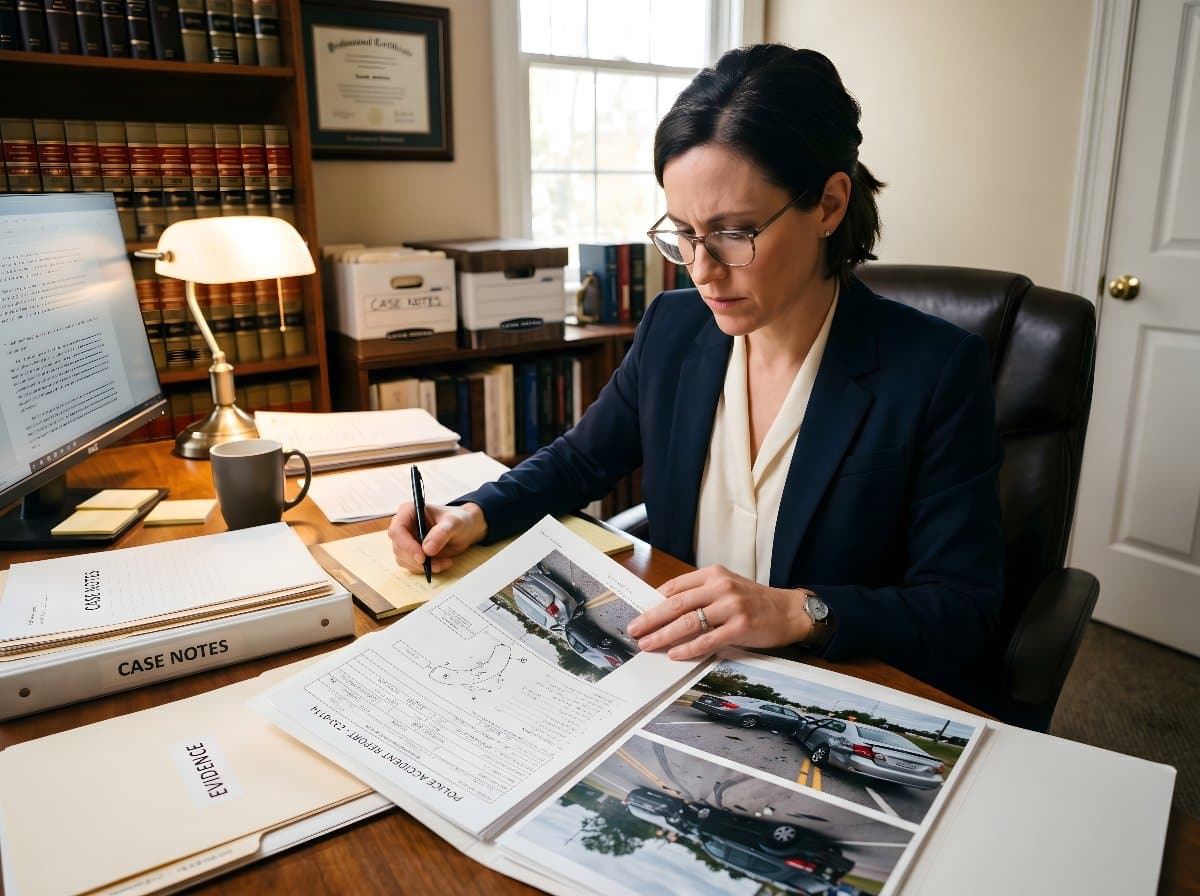 Evidence is what turns any personal injury case from a story into something provable. Opposing parties and insurance companies don’t just take victims at their word; they require documentation before they pay out compensation. In general, the earlier you start collecting evidence, the better—but what forms of evidence are best?
Keep reading to learn more about important forms of evidence in Georgia personal injury claims, and when you’re ready to discuss your claim in greater detail, contact Harris Lowry Manton LLP to discuss your case with our team.
What do you have to prove in a Georgia personal injury case?
There are four elements you must establish if you want to prove negligence in a Georgia personal injury claim. They include:
- Duty of care: The other party had an obligation to you to act responsibly and reasonably.
- Breach of duty: The other party failed to act reasonably.
- Causation: Because of their breach of duty, you were injured.
- Damages: Your injury left you with measurable harm and damages.
Each piece of evidence you gather for your personal injury claim should support one or more of these elements. For example, imagine you have a video of a driver running a red light and striking you on your side. Their choice to run a red light is a clear example of a breach of duty, and the video of them hitting you supports causation.
Your evidence may also serve a second purpose: proving that you are not at fault. Georgia is a modified comparative negligence state. This means that you can still recover compensation if you are at fault, as long as your share of fault is less than 50%. As you may expect, insurance companies do everything they can to shift blame to you, but the right evidence can stop that.
Medical records are the foundation of your claim
Medical records are often one of the most important forms of evidence you’ll have in your personal injury claim. They provide clear proof that you were injured, and in many cases, they may also support claims of causation. Some types of evidence to collect include:
- Emergency room or urgent care records (depending on the first place you went for care after your injury)
- Physician diagnoses, including diagnostic test results
- Imaging results, including X-rays, MRIs, and CT scans
- Physical therapy records
- Prescription information
- Progress notes
It’s important to keep full treatment records throughout this process. Gaps in your treatment (real or perceived) may raise questions about the severity of your injuries or if you’re worsening your injuries by failing to keep up with care.
Accident reports and official documentation
Your personal injury attorney will also look into accident reports and other forms of official documentation. These may include:
- Police reports (for car accidents, assaults, or dog bites)
- Incident reports from business owners (for slip and fall injuries)
- Workplace accident reports
These documents contain lots of useful information and insights, including statements from involved parties, observations from responding officers or staff members, and possibly early assessments of fault.
On their own, these reports don’t often fully determine fault, but they are an important piece of the puzzle.
Photos and videos
Having visual proof of what happened can have a major impact on the strength of your personal injury claim. Photos and videos can capture details and provide context that you can’t get from words alone. Some of the evidence you may want to hold on to includes:
- Photos of the accident scene; include photos of vehicle damage, injuries, road conditions, and any hazards that may have contributed (for car accidents) or hazards that contributed to your fall or workplace accident
- Photos of your injuries throughout recovery
- Surveillance footage from nearby homes or businesses, red light cameras, or traffic cameras (for car accidents), or a business’s footage of how you were injured
- Dashcam or cellphone video footage
When it comes to car accidents, conditions at a crash scene can change quickly. If you wait too long to gather this evidence, it will be gone—road crews will have the scene cleared up in a matter of hours. Taking photos as early as possible can preserve the fallout of the accident.
If you’re injured in a slip and fall, that evidence can also be time-sensitive. Businesses may be required to hold onto footage for a set period of time, but after that, it may be overwritten (though they may have a duty to preserve relevant footage once litigation is reasonably foreseeable).
Witness statements and expert testimony
Both types of witness statements—eyewitnesses and expert witnesses—can support your case. Eyewitnesses can provide context or details that you weren’t aware of. Expert witnesses may be able to provide insight on what happened, what contributed to your injuries, how long it may take to recover from your injuries, and the economic fallout of your injuries.
How do you prove financial and personal losses?
Recovering compensation requires proof of how your injuries affected your life. To document your economic damages, you can provide:
- Medical bills and treatment costs
- Receipts of out-of-pocket accident-related purchases
- Pay stubs or employer statements proving your lost wages
- Receipts or repair estimates for damaged property, such as your vehicle, clothes, or personal items
To prove non-economic damages, you can use these types of evidence:
- Personal injury journal highlighting your pain levels, tasks you’re unable to do, and other challenges
- Mental health records or therapy notes
- Statements from family and friends on how your life has changed
As a general rule, the more detailed your evidence is and the more diverse it is, the more it benefits your case.
Fight for compensation with Harris Lowry Manton LLP
If you’ve been injured in a car accident, slip and fall, workplace accident, or dog bite, it’s time to talk to a lawyer about your legal options. We’re here to help—just call us or reach out online today.

One of the nation’s top trial attorneys, Jeff Harris is an award-winning litigator who handles high-profile, complex cases across a wide variety of practice areas. He excels at securing justice for clients who have been seriously injured or killed, holding responsible parties accountable for their actions and negligence.
Read more about Jeffrey R. Harris here.