
The Role of Dash Cam Footage in Georgia Semi-Truck Injury Cases
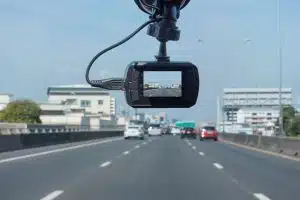 In a recent survey of licensed adult drivers, 30% of respondents reported using a dash cam while driving. Of those who did not already have a dash cam on their vehicle, roughly 40% reported that they would likely purchase one of these devices within the next year. As dash cams become more common on Georgia’s roadways, some drivers have already discovered how valuable dash cam footage can be in an accident case.
When semi-trucks cause accidents, the stakes are often particularly high for injured motorists and their loved ones. Because these vehicles can cause serious injuries to drivers and passengers, any evidence that supports a victim’s version of events can prove vital in an insurance investigation or personal injury lawsuit. Here’s a quick overview of how dash cam footage can play a role in truck accident cases and an explanation of how an experienced truck accident attorney can help you maximize the value of this kind of video evidence.
What is a dash cam?
As the name would suggest, a dash cam is a type of camera that can be installed on or near a vehicle’s dashboard to capture real-time footage of the car’s surroundings. Some dash cams sit on the dashboard itself, and others affix to windshields or rearview mirrors depending on the design. Dash cams may capture footage from a variety of different angles.
Dash cams have become increasingly common add-on features in vehicles, and some newer cars even come equipped with their own built-in camera systems. Dash cams are particularly popular among rideshare drivers who host numerous customers in their vehicles over the course of a shift, but other motorists have come to embrace this technology over the last several years.
Dash cams can be great tools for capturing footage of traffic incidents – from reckless driving behaviors to full-blown accident scenarios. Many popular dash cam models automatically save and upload footage to a cloud server so drivers can access and share the recording. This makes dash cam technology a great resource for preserving an accurate record of what a driver saw in the moment before, during, and after a crash.
Why dash cam footage matters in semi-truck accidents
After a semi-truck accident, involved parties, insurance companies, and law enforcement agencies usually have questions about who caused the accident and who should be held financially responsible. In Georgia, fault for an accident is often assigned based on a finding of negligence. This means you need to show that any damages you suffered were the direct result of another party’s failure to adhere to their legal duty of care.
If you can show that the truck driver involved in your crash caused the accident by behaving negligently (or recklessly), you may be able to hold them accountable for any losses you suffered as a result. This is where dash cam footage can come into play. If you or someone nearby captured the events before, during, and/or after a crash on film, you may be able to use that footage to identify any illegal or unsafe maneuvers that may have influenced the way the accident unfolded.
Dash cam footage is distinct from other common forms of evidence in semi-truck cases in that it does an excellent job of documenting and preserving the events of a crash in real-time. While witness statements, skid marks, and other evidence components can be subjective and open to some level of interpretation, dash cam footage can depict exactly how an accident occurred and may manage to capture subtle nuances that might have been missed in the absence of a clear video record.
Is dash cam evidence admissible in court?
In Georgia, dash cam footage is usually admissible in court as long as it meets certain legal standards. Any footage submitted as part of the formal record must be properly authenticated and must not have been improperly altered or tampered with before being submitted as evidence. The video must be deemed relevant to the case and must have been obtained legally.
There are important evidence-handling and authentication requirements for any evidence used in a court case, so it’s important that you and your truck accident lawyer follow the proper channels when recovering, sharing, and presenting dash cam footage before the court. If edits raise enough eyebrows, the footage may be excluded, and you may be left to rely on other forms of evidence in your case.
An experienced truck accident attorney should be up to date on the relevant rules for evidence preservation and authentication and can help you ensure that any available dash cam footage is properly handled and leveraged in your case. Even a small alteration to dash cam footage – like adding a photo filter or making a small trim – can raise serious questions about the admissibility of the footage, so you don’t want to take any chances if you’re hoping to maximize the value of your video evidence.
What if the truck driver has the footage?
Some semi-truck drivers use dash cams in their vehicles to keep an eye on their truck while on or off duty. If a truck driver captures an accident on their dash cam, the other party may want to review the footage to see if it provides any important context for their crash.
Trucking companies may be reluctant to hand over any evidence that could paint their employees in a negative light or that might suggest the truck driver was responsible for a crash. This is another reason why it’s wise to work with a professional truck accident lawyer who can send preservation requests and communicate with trucking companies about any evidence they may have in their possession.
Can dash cam footage impact settlement negotiations?
While some disputed truck accident claims may result in civil litigation, many cases end up settling out of court. Dash cam evidence can help streamline the negotiation process and – depending on what the footage shows – incentivize trucking companies to make a settlement offer rather than rolling the dice in court.
If dash cam footage includes evidence that shows a truck driver caused or contributed to a crash, trucking companies or their insurers may be less likely to deny fault or otherwise attempt to delay the claims process. Conversely, however, if dash cam footage indicates that another party caused or contributed to the crash, that party may have their claim denied or devalued based on their level of fault.
This is a particularly important consideration in Georgia, where we follow a modified comparative negligence system when assigning fault for accidents. Under this system, accident victims may only recover compensation from an alleged at-fault party if their own level of fault was less than 50%. Any driver whose level of fault was less than 50% may still be entitled to damages, but their final compensation will be reduced in accordance with their percentage of the blame.
That means if the dash cam footage suggests that you engaged in some behavior that contributed to the crash, you may wind up receiving a reduced settlement offer. This is the double-edged sword of dash cam evidence: If you were blameless in the crash, it can tip the scales in your favor, but it can also compromise your recovery if it shines a light on your own negligent actions.
Final thoughts
Dash cam footage can be a major asset to a semi-truck injury case in Georgia – as long as it is used wisely and appropriately. With video evidence in hand, injured victims can build a strong case for liability when the footage clearly shows that their suffering was caused by the thoughtless actions of another motorist.
At Harris Lowry Manton, LLP, our knowledgeable team of truck accident lawyers understands the high-stakes nature of these often catastrophic crashes. As dash cam technology becomes more commonplace, we are committed to helping accident survivors leverage dash cam footage and other digital evidence to help them challenge false claims of liability and argue for fair compensation under the law.
If you’ve been injured in a collision with a semi-truck, our Atlanta and Savannah-based teams might be able to help you access the support and resources you need to work towards a fair outcome. Fill out our online contact form to schedule your free case consultation, and let’s discuss how dash cam footage could play a role in your semi-truck injury case.

One of the nation’s top trial attorneys, Jeff Harris is an award-winning litigator who handles high-profile, complex cases across a wide variety of practice areas. He excels at securing justice for clients who have been seriously injured or killed, holding responsible parties accountable for their actions and negligence.
Read more about Jeffrey R. Harris here.