
How Trucking Company Insurance Policies Differ from Standard Auto Claims
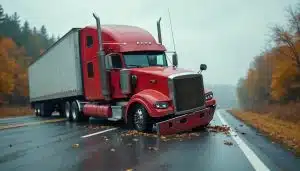 Dealing with a trucking accident claim can feel like facing an entirely different insurance system compared to an automobile car crash. Commercial trucking insurance policies have different rules, coverage amounts, and legal complexities that set them apart from regular auto policies.
Understanding how these commercial policies operate and how adjusters and their legal teams may respond can make a significant difference in how much compensation you ultimately recover after a crash. Knowing these differences helps you protect your rights and stand up to aggressive claims tactics.
Primary differences in insurance policies
Understanding insurance coverage in trucking accidents takes a much different mindset than in ordinary car crash cases. The policies, money involved, and how insurance companies respond can be far more complex and aggressive. Here’s how commercial trucking insurance claims differ:
Higher policy limits
Under federal law, trucking companies transporting non-hazardous property must carry a minimum of $750,000 in liability coverage. Trucking companies transporting hazardous materials are required to carry $5,000,000 in coverage. This doesn’t include excess or umbrella policies that could potentially add more insurance coverage. This means there is typically more money available to pay injured parties for serious claims, but insurance companies tend to fight pretty hard to limit what injured individuals receive.
Multiple policies in play
Truck accidents typically involve more moving pieces than automobile accidents do. For example, the tractor that pulls the trailer may have its own policy, the trailer may be insured separately, the motor carrier (the trucking company organizing the load) might also have an insurance policy, and additional separate insurance may exist for cargo or excess/umbrella coverage. These packages create confusion and may result in different insurance companies fighting against each other.
Aggressiveness of adjusters and trucking companies
Commercial trucking insurers may deploy rapid-response teams after a crash to protect their bottom line. You might get phone calls or settlement offers almost right away, alongside requests for recorded statements. These strategies are about building the trucking company’s defense, not protecting injured people. Accepting anything early can limit future compensation. Decisions and statements should be made cautiously and with proper legal advice.
With truck accident insurance claims, it’s always smart to speak with a personal injury lawyer as soon as possible after the accident to protect yourself.
Who you can hold accountable in a trucking accident case
When you’re injured in a trucking accident, multiple parties may be legally responsible for the crash and your subsequent injuries. Knowing all the potentially liable actors helps you (and your attorney) build a stronger claim.
The truck driver
Truck drivers themselves can be held accountable if their poor decisions result in a collision. They may be responsible for driver errors such as speeding, using a cell phone while driving, skipping essential rest breaks, driving while tired, running red lights, or getting behind the wheel after drinking or taking drugs. The truck driver may also be responsible for violating trucking regulations or for failing to perform equipment checks.
The motor carrier (Vicarious liability and direct fault)
Trucking companies could be responsible for these incidents as well. Here’s how this usually plays out:
Vicarious liability
Motor carriers are vicariously liable for crashes caused by their drivers operating within the scope of their employment. This rule is meant to encourage transportation companies to implement safety policies and keep negligent drivers off the highways.
Direct negligence by the carrier
Sometimes, the company may be held directly liable.
- Negligent hiring: Some companies cut corners during hiring, and can miss red flags like poor safety records, DUIs, or a lack of the correct commercial license.
- Negligent retention: After hiring a dangerous or unreliable driver, trucking companies could be liable if they fail to discipline them despite warning signs.
- Negligent supervision: Companies that don’t enforce safety rules, monitor logbooks, or check for substance abuse issues can be held partially at fault when accidents happen.
Maintenance contractors and manufacturers
Accidents may result from faulty repair work or a defective part on the truck. If a contractor overlooks an issue with the vehicle or doesn’t properly fix it and it causes an accident, they could be responsible. If the truck part itself was defective and caused an accident, the manufacturer could be liable.
These are just some of the parties who may be held responsible after an accident. When you work with an experienced trucking accident lawyer, they’ll figure out who is liable and what steps you need to take to hold them legally responsible.
How trucking insurers defend claims
When a serious crash involves a commercial truck, the insurance company and its legal team take action almost immediately. Their defense tactics are designed to minimize how much they’ll pay, often at the expense of injured parties. Here’s what to expect:
Rapid scene control
Trucking companies may deploy “rapid response” teams to the accident site. They gather evidence, interview witnesses, and try to steer the investigation before injured parties have a chance to start their own case.
Friendly adjuster calls
You might get sympathetic calls from an insurer who seems eager to “help,” but their goal is often to lead you into saying something that may be used against you later.
Recorded statements and early, low offers
Insurers frequently request recorded statements, hoping for inconsistencies they can use to deny or limit claims. They also may reach out with an early offer that is often much less than a case is truly worth.
Independent contractor defense
It’s common for trucking companies to claim the driver was not truly their employee, but an “independent contractor,” as a way to deny vicarious liability for injuries or damages.
Our firm knows these defense strategies well and we have extensive experience overcoming such tactics. With more than $100 million recovered for clients and the distinction of being the only Georgia firm to win No. 1 verdicts in seven different injury categories, we aren’t strangers to the pressure that trucking insurers bring. We will help you stand up against these tactics to get the compensation you’re truly entitled to. Contact Harris Lowry Manton to schedule your free consultation whenever you’re ready to discuss your case.

Steve Lowry is an award-winning personal injury litigator who has secured record-setting jury verdicts on behalf of his clients. A passionate advocate for individuals who have been harmed by the actions of others, Steve has won numerous top 10 verdicts in Georgia.
Read more about Stephen G. Lowry here.